This is our script and storyboard for our tourism ad project that I (Maisie) was in charge of. I created this story board by myself with the help of my team members for inputs and ideas.
Script⋆☆˖
We don't have a lot of dialogue for our advertisement. There is only one particular scene which shows a short conversation between two characters:
Michelle: "Yo you wanna go out tonight?"
Anna (Kris): *sigh*
Storyboard⋆.ೃ࿔*:・
First attempt: Page 1
This was my first attempt on the first page of our storyboard:
After a discussion with my team, there are some modifications that we'd like to make (add more info) to improve this storyboard:
Second attempt: Page 1
Changes
As shown in the image, there are additional informations that I added to my first draft. First of all, I added a title on top of the page instead of just numbering it "1". This helps me identify the scenes that are being drawn and prevents confusion. The second and last one is a tiny change, which is adding information regarding the sounds in the last clip (bottom right). This keeps the sound consistent throughout every changes in clips and helps me with the editing.
Additionally, there are also changes in the order of the scenes because we had a change of plans during shooting. For the very first scene, instead of starting off with a closeup of Anna's (Kris's) phone, we decided to begin with her entering the room, exhausted. Here is a screenshot of that from our final video:
After that, we also earned some feedback from Mr. Nick in order to make our video look more like an advertisement. He suggested that we add some clips in between the scene of her entering her bedroom with rhetorical questions. Here is an example of it from our final video:
Then, he also suggested me to use a particular font for the clip above for effect, but I will be explaining that further in my "Editing" blog. In my storyboard, the font I drew looked slightly bubbly and chubby, however as you can see from the picture above I changed it to calligraphy that looks handwritten. Other than that, instead of using a "pop up" animation for the text like I mentioned in my storyboard, I decided to change it to a softer animation that fades in.
First attempt: Page 2
My first attempt on the second page was immediately successful. However, of course there are major changes made for this page.
Changes
First of all, after the first clip shown in this page of the storyboard, I decided to transition it (add) to another clip instead of the clip I drew in the image above. The clip lasted for 3 seconds and uses a pan shot, following the moving Kristine from a fixed position as well as a long shot. Here is the clip from our final video:
Additionally, we did not end up using clip number 5 (right one from the second row) and changed the order a bit. We moved clip 3 (second from first row) to clip number 5, replacing it. The clip lasted for 6 seconds and uses a pan shot, as well as a medium shot for its camera angle. Here is the clip we ended up using:
Then, we cancelled out scenes 6 and 7 (both clips from third row) and replaced them with one clip instead that shows the vast blue sky. The scene lasted for 4 seconds, shot from a low angle, handheld. Here is the clip we ended up using:
Lastly, we made a pretty big change after the scene above. On our storyboard above, we first planned on moving on to the next location: Love Anchor. However, we had a change of plans and decided that our next location should be Playroom instead. So after the scene above, it should transition to this clip:
First attempt: Page 3
Changes
There are lots of changes that happened in this storyboard. As I've mentioned above, we were supposed to start with Playroom after the beach scene. So, the scene after Kris walking in playroom should've been the fifth box in the picture on top (number 1 from the third row). Here is a picture of it from our final video:
After that, everything just continues like it's supposed to. After the picture above, it continues with box number 6 (second from the third row). Here is a picture of the scene:
First attempt: Page 4
There are no changes for this page.
First attempt: Page 5
Changes
There is a big change for this page. As previously mentioned, our scenes for Love Anchor was originally planned to come after the beach. However, since it has been replaced by Playroom, Love Anchor scenes were moved to after slushy society.
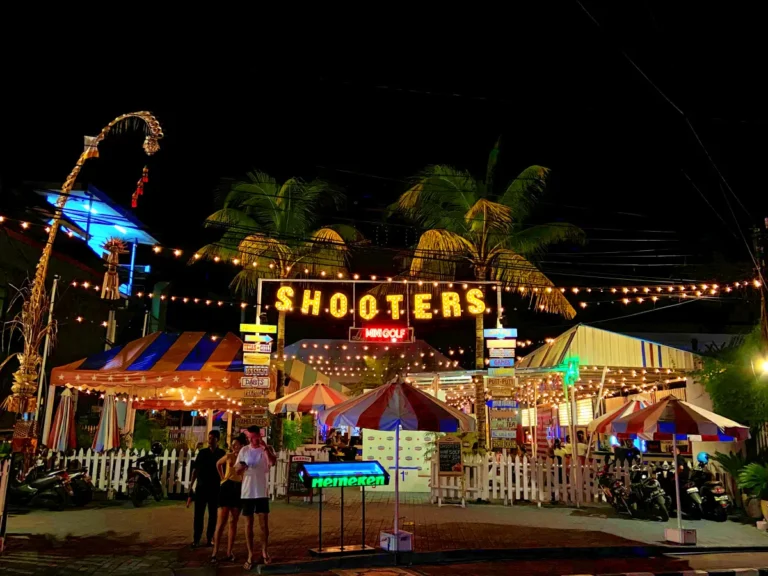
We can see from the picture above that Shooters is next after Slushy Society (after the scene where we all took pics with the phone). This is false due to our change of plans. Shooters is supposed to come after Love Anchor, therefore, the scene that's supposed to come after the seventh box (first from the fourth row) is as follows:
First attempt: Page 6
Changes
Since we got the order mixed up, supposedly, the scenes that are supposed to be in this page of the storyboard are the scenes from Love Anchor. However, since the order has changed, this page consists of scenes from Shooters. Here is a picture of the scene that is supposed to be first in this page:
Other than that, there will not be any more changes starting from here.
First attempt: Page 7 (last)
This is the end of our storyboard. This page looks a little bit messy because I was rushing.
Self-reflection☾⋆。𖦹 °✩
Making the storyboard was my least favorite task to do compared to every other task in this project. It is so time consuming and annoying. What I hated the most about the storyboard was the part where I had to list down all of the changes that occurred on my blog.
However, I have to admit that the storyboard was still slightly fun to make. Despite it being annoying and time consuming, I enjoyed drawing the storyboard as well. Overall, the storyboard helped me envision how I want my final ad to look like, and truly guided me during the process of editing.
Next time, I'll try to create my story board in two different attempts, one is before I start editing, and the other one is after I finished editing most parts. This way, I can organize the changes properly without having to type so much in my blog.
In this post I will select two of our intended locations and determine potential risks that may be involved when shooting there.
Location 1: Bedroom
Location 1
Location:
Lamiya's Bedroom.
Events in scene:
Theres a scene where subject 1 gets a phone call from subject 2 inviting them to go out.
Pros of location:
Its free and doesn't not have rules (unless there are parental rules).
Cons of location:
There could be disruption from other family members in the house, looks too much like a child's bedroom. It's too cramp to film in which can be difficult to manage fast.
Alternatives:
Any other member's bedroom.
Risk Assessment
Potential hazards:
The furnitures are weak which can possibly collapse and ruin the set.
Evaluate risks:
Once its collapse, it will take a lot of time to clean up and get it back to how it was originally.
Control measures:
We'll have people look out for furnitures that might collapse, and we'll try to avoid shooting near broken furnitures.
Responsibility:
Anyone who isn't doing camera work or light work.
Time frame:
We could control these before we shoot and maybe doing the shooting process.
Other notes:
-
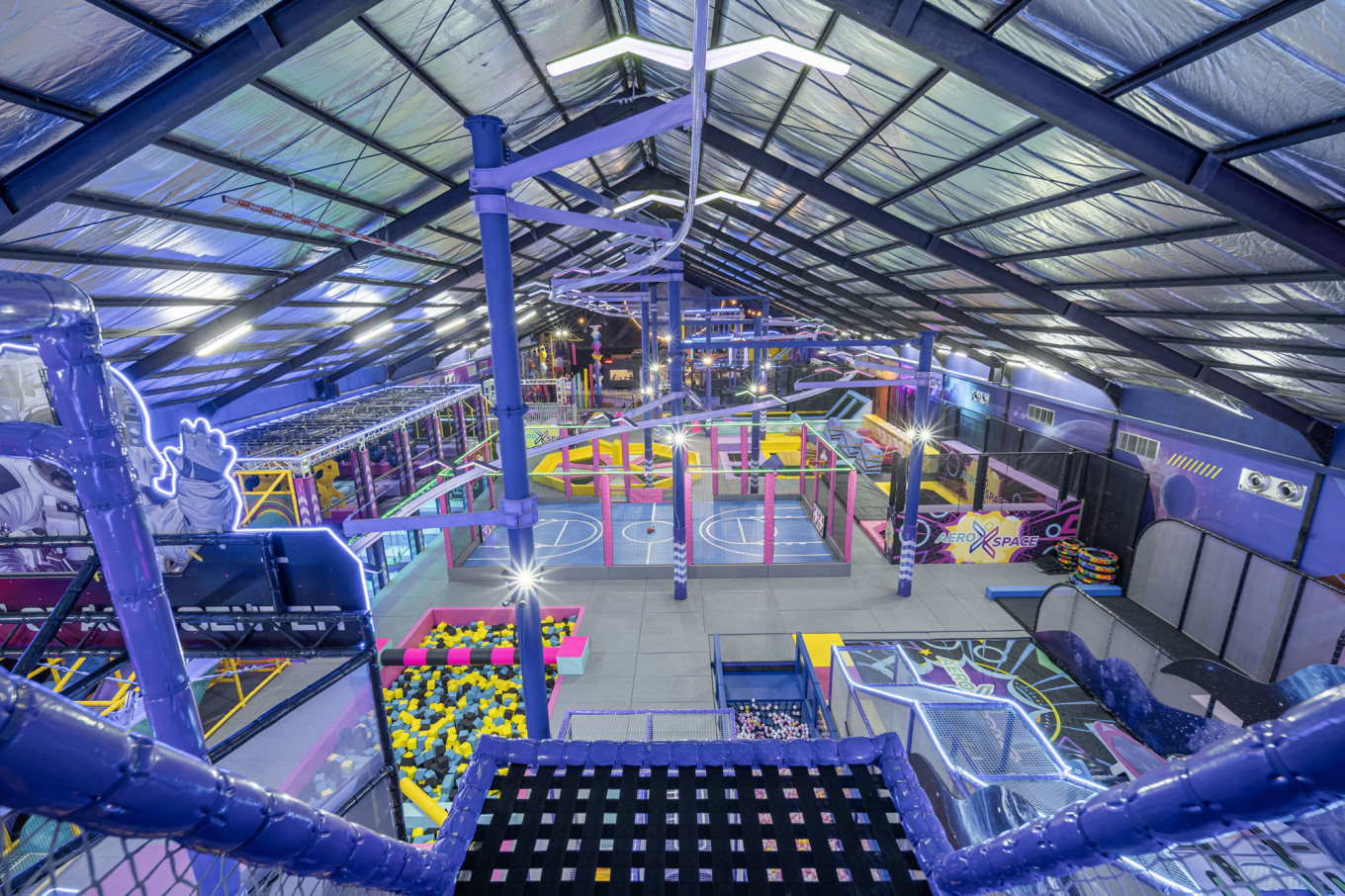
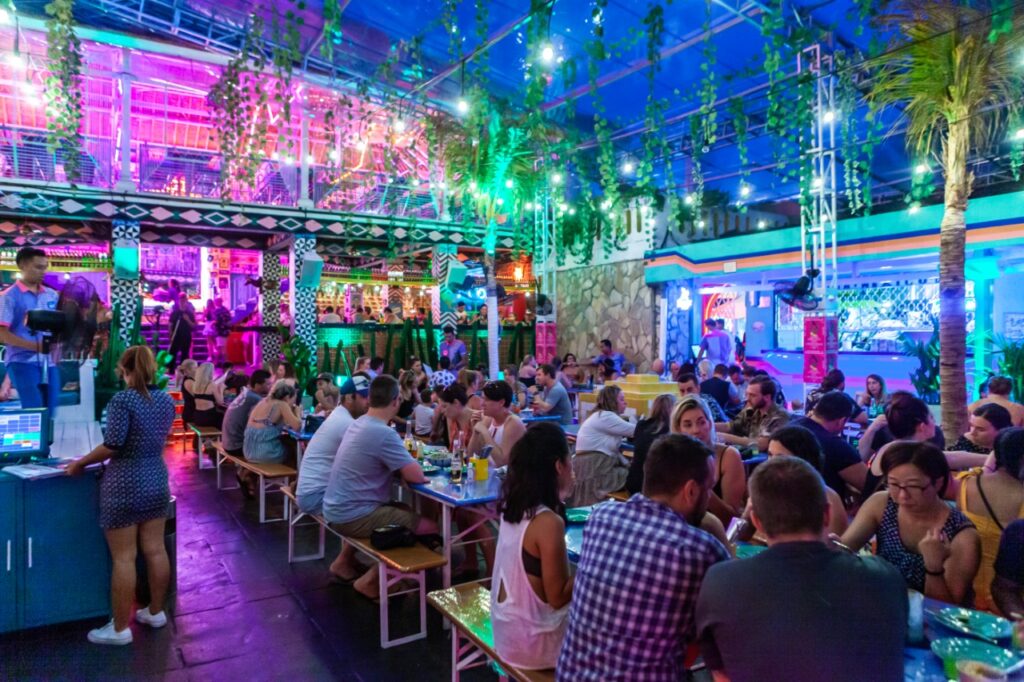
Location 2: Fun Areas
Changes: we did not end up going here! Forget this:)
Changes: we also did not end up going here! Please forget this:)
We will record people having fun, candid pictures and the unique features.
Pros of location:
Its has unique features and great places to record. Its crowded making it easier to film people having fun.
Cons of location:
We need to pay to enter which can be expensive, Recording people having fun can distract them making them feel uncomfortable.
Alternatives:
If one cant then we skip that place.
Risk Assessment
Potential hazards:
We might distract people and potentially cause problems. there could be locations that do not allow recordings with special project.
Evaluate risks:
We will ask for consent and avoid making distractions for the people around us, and those who are doing a certain activity requiring us to take turns with those that are using them.
Control measures:
We will have people clearing space and asking consent and record in past space. So that means during recording we cannot take a long time.
Responsibility:
Anyone with good communication skills and confidence.
Time frame:
During filming and before filming.
Other notes:
-
(Texts in red are the places that we ended up crossing out)
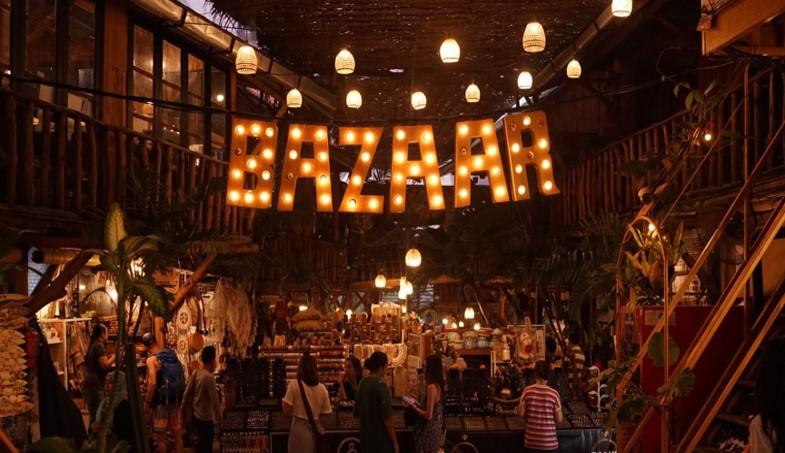
Location 3: Night Market
Location 3
Location:
Love Anchor
Events in scene:
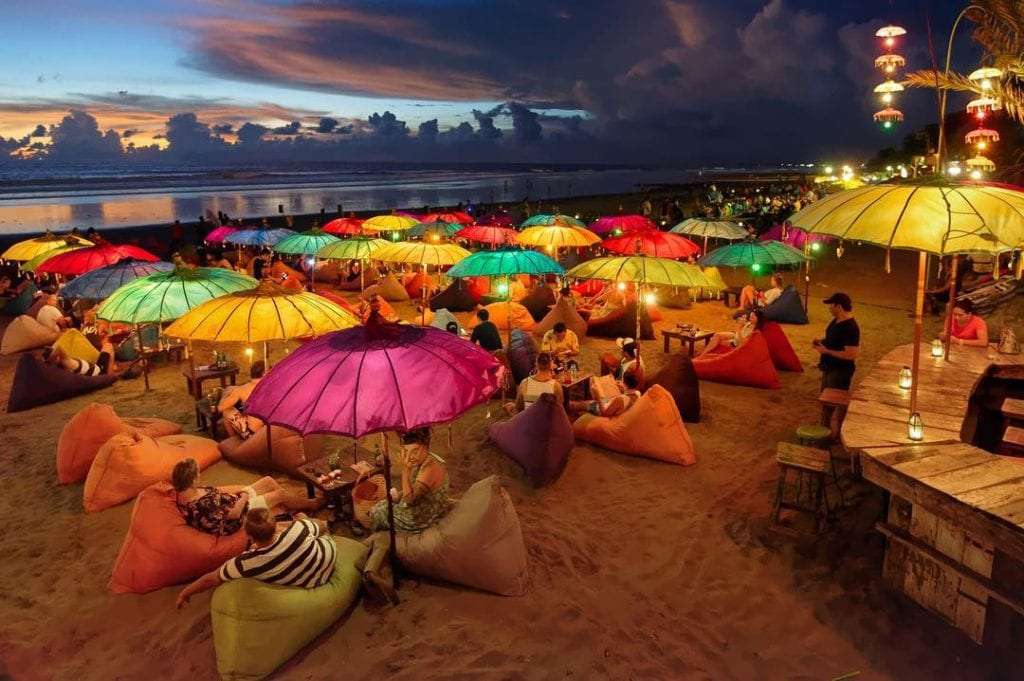
We will shoot of people walking around having fun, close shots of the markets, and colourful atmosphere.
Pros of location:
Its very vibrant so it will fit the theme, its a public area so we are freely able to record anything.
Cons of location:
Its crowded so we might be scared to shoot, People might feel uncomfortable if we record them.
Alternatives:
The Flea Market, Kuta Art Market.
Risk Assessment
Potential hazards:
The place is crowded and we might block peoples way which might potentially cause conflict.
Evaluate risks:
We will have to apologise and if it creates attention, we might have to leave to another place before going back to take shots.
Control measures:
We will let security, employees, and people know if anyone is curious, if they look annoyed and weirded out will ask for consent.
Responsibility:
If anyone isnt recording well have someone in charge of looking after the behind sets. We need someone with good confidence.
Time frame:
Before or after shooting our shots.
Other notes:
-
Location 4: Beaches
Location 4
Location:
Double Six Beach
Events in scene:
We will record sunset scenes, and basically candid shots.
Pros of location:
Its very big and has many unique features that we can also put in our scenes.
Cons of location:
We are shooting the scenes during night so it could be dangerous, and there could be a potential risk of losing things. It's crowded so we might have low confidences while taking shots.
Alternatives:
Seminyak Beach, Pantai Batu Belig Beach.
Risk Assessment
Potential hazards:
Loosing things in crowded places and the sand might be unstable making it hard to balance things or when recording. The water also can be distrustful
Evaluate risks:
If we lose things, we might have to find a nearby shop and get a spare. If it's a personal belonging, we'll be forced to find it after we finish recording.
Control measures:
We'll have people to look after personal or even valuable items it order for it to be safe.
Responsibility:
Any one of our members that isn't doing a task.
Time frame:
Before we start filming we make sure we have everything organised so that it wont be a scattered around
Other notes:
-
Self-reflection ✶𓏲ּ꩜ .ᐟ
I was not in charge of making this task, therefore I cannot reflect on the process of making this. First of all, I dislike how a lot of the tables didn't fit properly in my blog page. Mr. Nick advised us to change the measurements of our blog to prevent anything from going over the edge. After that, all of the tables fit, but the wideness of the blog looks slightly weird to me
Additionally, I have something to say about how useful the location and scout risk assessment is to our tourism ad project. During shooting sessions, the location and scout and risk assessment helps us remember all of the possible locations that we have previously planned. Our group decided to film at all the fun areas in one day, hence we would need to arrange which places we'd have to go to first and whether we plan on crossing any locations out.
This blog has helped us remember about the possible dangers that could happen and it makes us as careful as possible to avoid any unwanted things to occur. Overall, I think Kristine did her job really well in making the location scout and risk assessment.
This blog page is where I will summarize about what I learned in Media Studies class with Mr. Nick.
Term 1
Genre ⋆。°✩
Definition of Genre
Genre is a way of categorizing media. This includes movies, songs, art, etc. For example, in movies, genres include action, comedy, romance, sci-fi and many more. In songs, genres include rock, classical or pop. Genre helps people know what to expect.
Definition of Genre Convention
Genre conventions are features that show up in a specific genre. For example, in horror movies, you often see jump scares and hear creepy music. Whereas in romance movies, you'd usually see couples being in love.
Long Legs by Osgood Perkins
This movie has a hybrid genre, that being a combination of horror, thriller, crime fiction and mystery. The genre conventions are as the following:
Setting
An eerie looking, secluded white house in the middle of a forest, surrounded by tall trees with no one else around.
A mysterious FBI hideout decorated by dim lightings with no one else other than the main characters in sight.
The antagonist’s gloomy secret hideout under the protagonist's house that nobody else knows about except the protagonist's mom
Characters
FBI special agent (Lee Harker)
Lee's single mom (Ruth Harker)
Serial killer, also satan worshipper (Long Legs)
FBI leader (Agent Carter), etc
Sound/music
Scary music
Loud sound effects for jump scare
Creepy singing
Screaming, etc
Events
Murder
Case investigations, etc
This movie does a great job appealing avid horror enjoyers who are looking for a unique plot, because it is different from typical horror movies with predicted story plots. You really can't predict what's about to happen next with this movie. I highly recommend it!
Mr. Nick also gave us a link to a YouTube video about genre that we can learn from:
Camera ᯓ★
In this lesson, we studied about how important camera work is in media. Camera work is important because it helps tell the story without words. In movies, they are very careful and precise about their camera work, because it will greatly affect how the audience feels and helps them understand what is happening.
Different camera angles
Here are the different types of camera angles. Each camera angles has their own effect towards the audience:
Long shot: shows the entire scene from a distance. Often used to show a character in a big setting, or to show multiple things happening at once
Extreme long shot: shows an extremely wide shot of a large area, e.g. a city. Often used to show how big a place is
Medium shot: shows a person from the waist up. Often used to focus on a character's action and expression
Cowboy shot: shows a person from mid-thigh up. Often used in American or old Western movies to show cowboys
Close up: shows a specific detail very closely. Often used to highlight emotions or important details
Extreme close up: shows a small detail very closely, e.g a person's eye or mouth
POV: shows what a character is looking at. Often used to help the audience understand things from the character's perspective
Over the shoulder: shows a character from the back (shoulder and head) and another character in front of them. Often used to show two characters interacting with each other
High angle: shows something from a high angle, as if it's looking down on them. Often used to make the character seem smaller or weaker
Low angle: shows something from a low angle, as if it's looking up on them. Often used to make the character seem stronger and intimidating
Dutch angle: shows a tilted landscape, so the scene look slightly slanted. Often used to make the audience feel uneasy
Establishing shot: shows a wide or long shot, usually at the start of a movie. Often used to show the audience where the story is taking place
After learning about all 12 camera angles, we were all given a task as a group of two to draw and describe a camera angle that we were assigned to:
Me and my teammate, Lamiya, made our own on over the shoulder shot.
Mr. Nick also gave us a Youtube video about camera angles that we can study from:
Different camera movements
Mr. Nick also taught us about different camera movements used in media. Camera movements make scenes look more interesting:
Storyboard ͙͘͡★
Mr. Nick gave us a lesson on storyboards as well. He said that this will be needed for our tourism ad project.
Storyboards are visual plans that will help us organize how our advertisement will look. Mr. Nick made us practice on making storyboards in class based on a short clip. Here's an example of a great storyboard that I found on the internet:
Sound ⋆.˚𖦹⋆✮⋆.˚
We also learned about the importance of sound as well as their types. Sound is important because it adds emotion to the scene. For example, when a movie shows a scene of someone crying, it will be accompanied by melancholic or depressing music.
Other than music, sound also includes sound effects. Sound effects can make a scene look more realistic. For example, in fight scenes, dramatic sound effects are usually added after every action (punching, hitting, kicking, etc) to add more tension.
Here are the different types of sounds and their effects:
Non-diegetic tones
Additionally, non-diegetic sounds are broken down into three other categories:
Mise-en-scene ‧₊˚✩彡
Mise-en-scene refers to the arrangement and design of visual elements within a frame or a scene. It is important because it involves everything you see in a scene. A good mise-en-scene are able to give the audience clues about the character and their backstory. For example, characters who carry guns and are dressed in a police attire can easily be distinguished as a police officer.
This is what's included in mise-en-scene:
Mr. Nick also made us practice drawing a scene and then highlighting the mise-en-scene in the scene. I wasn't there because I was sick, but here's an example of what my classmates did in class:
Mr. Nick also gave my classmates another class activity, where they had to label the mise-en-scene of different paper cutouts and explain the feelings each category creates:
Lastly, Mr. Nick gave us a link to a YouTube video about mise-en-scene that we can use to learn from:
Edit ⋆⭒˚.⋆
We also had a class about editing. However, I wasn't present throughout the whole lesson because I had to leave early. This summary will be based on Mr. Nick's presentation and what my friends told me.
Editing is the process of selecting, arranging and manipulating footage to create a cohesive and engaging story. It is important to movie makers because it helps control the pacing and the mood that they're trying to aim for.
Here are two types of takes and their effects:
Other than that, there are two types of editing, which are continuity and non-continuity editing:
Continuity editing
Straight cut: a simple transition where one shot immediately changes to the next without any special effects used
Eye line match: when a shot shows a character looking at something, and the next shot shows what they are looking at
Shot/reverse shot: when it shows a character looking at something or someone, and then the shot after that shows what they are looking at. Often used in conversations
Cutaway/insert: a shot that shows something related to the main action, like a closeup of something. Often used to highlight something important or to add information
Non-continuity editing
Cross cut (parallel cut): when two or more scenes are happening at the same time but in different locations. Often used to add tension
Flash back: when a scene jumps back into the past to show what happens then. Often used to add background information
Flash forward: when a scene jumps into the future to show what's gonna happen. Often used to create suspense
Jump cut: a sudden change between two shots of the same scene. Often used to create a dramatic effect
Last but not least, my classmates told me that Mr. Nick told them to do a practice on making our own timeline edit.
Here is an example of one of it made by my classmates:
Reflection ⊹.✮₊⋆
Making this blog page definitely helps me keep in track of what I've learned from every media class I have with Mr. Nick. A lot of these lessons are very useful to me, because I can apply most of these into my first tourism ad project. Additionally, I can also start applying the knowledge I've gained from these lessons into my daily life, for example when I'm watching movies at home or at the cinema. I will continue updating this blog page for future lessons.
A text must be SIMILAR enough to be recognised as a particular genre. But it must also be DIFFERENT enough to be new and exciting.
Because:
- It provides the audience with expectations
- It provides the writer/director with a blueprint
- It provides distributors with a target audience
This gives the audience variety to enjoy, also it diversifies the financial risk for the production company.
Let's take the Batman franchise as an example. Both of these shows are about Batman, but portrayed in different ways. In the original Batman (mostly targeted towards older audiences) the themes are serious and explicit: murder, crime, death, etc. On the other hand, Batwheels are targeted towards younger audiences who are familiar with Batman and his friends. The characters are portrayed in different ways (using super cars). This way, they made it unique and different enough to attract a wider range of audience.
David Buckingham
David Buckingham’s theory says that genres change over time; they are not always the same. He thinks that genres are influenced by the audience, creators, and society. As things like culture and technology change, genres change too, to keep people interested. So, genres like horror or comedy may look different as people’s tastes and interests change.
We can use the Spiderman franchise as an example. As we can see in Spiderman 2004, Tobey Maguire as Spiderman is seen wearing a simple, fabric suit, almost like normal everyday clothes. On the other hand, Tom Holland in Spiderman 2022 is seen wearing an incredibly high tech suit. His suit is obviously better than Tobey Maguire's, as it possesses incredible features, such as: spider legs, can be tough and act as an armor,
Narrative theories*❆ ₊⋆
Binary opposites
Binary opposites are pairs of opposites used to make stories more interesting, like good vs. bad, hero vs. villain, or light vs. dark. These opposites help show conflict and make the story more exciting.
Mr. Nick also showed us this video from YouTube to help us understand better about binary opposites. I think the video is really funny.
The 5 narrative codes
A code is an aspect of a text from which the audience can derive meaning. We can do this through decoding or deconstructing the text. Here are the 5 narrative codes:
Hermeneutic codes
Hermeneutic codes are clues or mysteries in a story that make the audience curious and keep them watching. These codes raise questions, like “Who did it?” or “What will happen next?” By revealing answers slowly, they build suspense and keep the audience engaged. In the poster above, people might think about several questions that the movie might slowly answer as the audience watches. The explosions and planes crashing helps the audience predict that a war/fight might happen.
Proairetic codes
Proairetic codes are clues in a story that create suspense and make the audience curious about what will happen next. They are usually small actions or events, like a character hearing a strange noise or reaching for a weapon. These moments keep the audience interested by hinting that something important is about to happen, building tension and moving the story forward.
Semantic codes
Semantic codes are hints that help us understand what’s happening in a scene. These hints can be things like colors, symbols, or objects. For example, a red rose might show love, or dark lighting might show danger. Semantic codes give extra meaning, helping the audience feel or understand things without being told directly.
Symbolic codes
Symbolic codes are simple things that stand for bigger ideas. For example, in the picture above, the red light saber indicates that the character holding it is evil and strong. These things help the audience understand the story better without using words.
Cultural codes
Cultural codes in media are signs or symbols that show ideas or beliefs in a culture. These can be things like clothes, music, colors, or how people act, which help explain a story. For example, in the picture above, we can see Islamic symbols mixed in with fonts that look similar to the Arabic letters. This indicates that the picture is leaning to the Islamic culture. These codes help the audience understand what’s happening based on what people know from their culture.
Stages of media texts‧₊˚𖤣 𖥧‧₊⚘ ❀༉˚.
Production
The production stage in media texts is when ideas are turned into actual recordings. It includes filming scenes, recording sound, setting up lights, and creating sets and costumes. The director leads the actors and plans each shot to bring the project to life. Here are some examples of media production companies:
Distribution
The distribution stage in media is when the finished product, like a movie or show, is shared with the audience. This includes deciding where to release it, like in theaters, on TV, or online, and promoting it so people know to watch. Simply put, distribution is about getting the media to viewers. Here are some examples of distribution companies:
Exhibition
The exhibition stage in media is when the audience finally watches or views the finished product, like a movie, show, or ad. This happens in places like cinemas, on TV, or through streaming services or platform. Exhibition is all about showing the media to the public. Here are some examples of exhibition companies:
During this lesson, we also had a debate about which and why each stages of production are the most important and crucial. I was in the production team and I'm happy I was, because I personally think that production is the most important stage.
Practice
This is a practice that we did as a class in our classroom notes. We were given a company to research on (their stage of production, when it was founded, reason, etc.) I was in charge of Netflix, as you can see.
Media consolidation࿐ྀུ ❀ꦿ֗
Definition
Media consolidation is the concentration of ownership of our media sources (news, film, TV, radio, video games etc) into the hands of fewer and fewer corporations. It is also when big media companies buy smaller ones, so a few large companies control most of what people watch, read, or listen to. This means a small number of companies have more control over what media people see.
Theory: Curran & Seaton
The Curran & Seaton theory says that some of the big companies control most of the media, which affects what people see, hear, and read. These companies focus more on making money than giving different opinions or information. The theory shows that big companies have the power to affect and change what people think.
Example
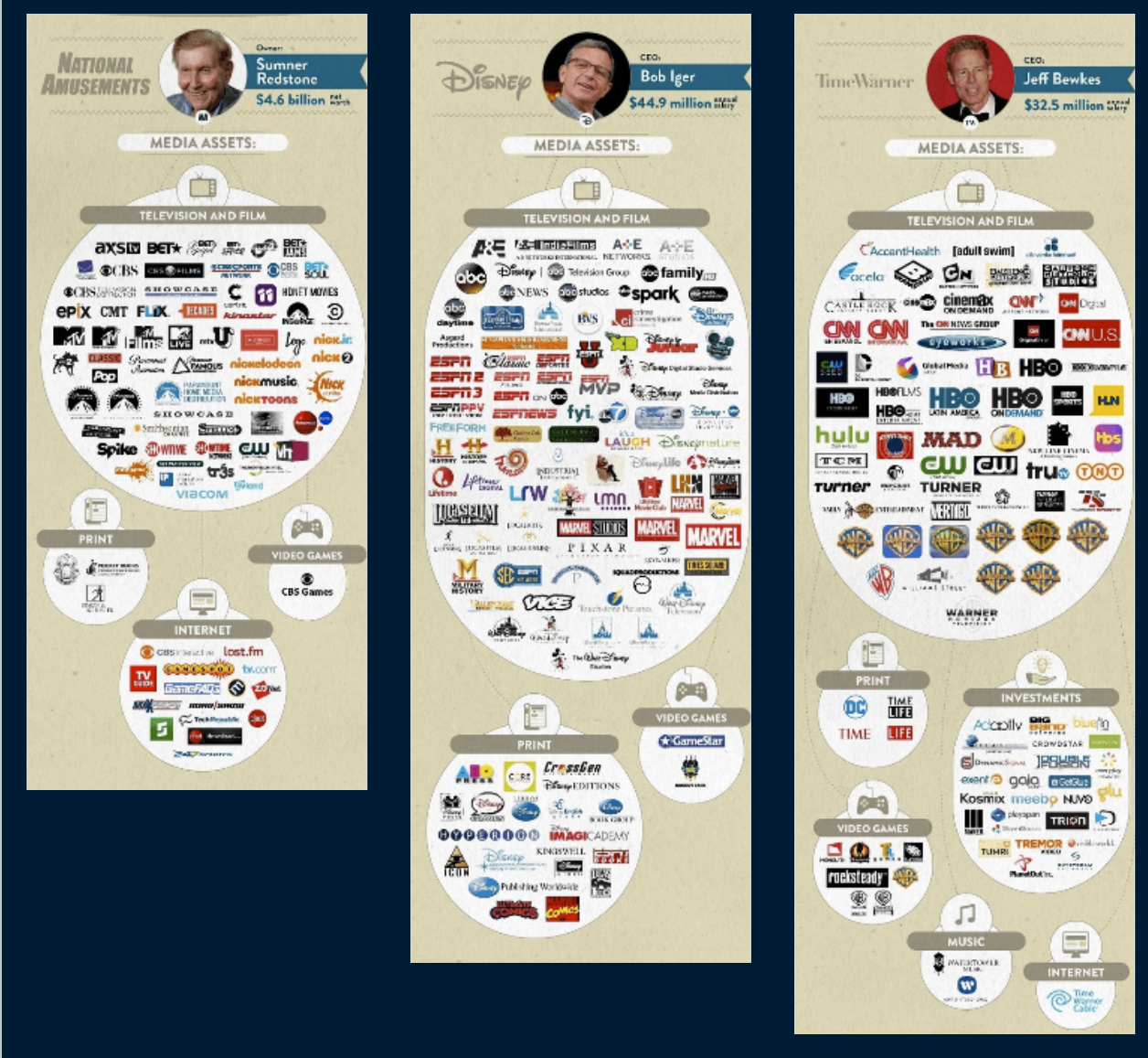
Here are some examples of media consolidation by different companies in different aspects. In the example above, we can see that Disney owns a lot of companies, even video game and printing companies.
Advantages & disadvantages
There are advantages & disadvantages for both the audience and the company. To the audience, it's all about the service they receive. To the company, it's all about the profit they gain.
Media funding⊹₊˚ꕤ˚₊⊹
How is content influenced by the ownership/funding of a media company?
This is a practice we did as a class in our joint classroom notes. We were told to answer this exam question. To answer this question, Mr. Nick advised us to use "Bluey" as a reference to our answer, because we have just learned about the show in class.
Marvel Comics
This is an example of how media ownership can affect how media is distributed. Ever since Disney took ownership of Marvel Comics, some aspects of the comics have been changed to appear more family friendly. These aspects include: violence, alcoholism, sexualization, etc. In order for their younger audiences to be able to read the Marvel Comics, numbers of inappropriate factors need to be altered.
Deadpool
Deadpool is also a similar case. Due to it being heavily violent, Disney would have to put effort into altering some aspects of the franchise to make it more appropriate to younger audiences.
Vertical integration⋆˚✿˖°✧˖
As explained in the picture above, vertical integration is when a company owns more than one stage of the media chain. Let's use the Deadpool & Wolverine franchise again as an example. The franchise was produced both by Marvel Studios and 21st Century Fox, indicating their collaboration. Disney then distributed the franchise themselves, and later exhibited as well through their own platform (Disney+) and the cinemas.
Advantages
In the world of media ownership, bigger is always better. To what extent is this true in the media area you have studied?
We also practiced answering an exam question in our joint classroom notes. Mr. Nick told us to follow a certain structure in order to get full points. We also helped each other improve by checking each others' work at the end of the lesson using highlights for different informations.
Horizontal integration❁༺ ˎˊ-
As the picture states, horizontal integration is when a company owns more than one stage within the same level. Let's take Warner Bros. Discovery as an example. They produce different content with the different companies they own. They create games, comics, animated shows, etc.
Example
Advantages
Just like vertical integration, horizontal integration also has many benefits to both the company and the audience. For the company, it's all about allowing them to make more unique/interesting content. For the audience, it's all about how entertaining the contents are and how it can get more interesting in the future as they expect for more.
Classroom notes
This is another practice that we did in our joint classroom notes. As a group, we were told to select a property and list down the different media texts that they have. We chose the Black Widow from Marvel as our property.
Synergy⋆˚✿˖° 𐙚
Definition
In media, synergy means that different parts of a company work together to make a bigger impact than they could alone. For example, a movie company, a music label, and a toy company might team up to promote a movie, so they all reach more people and become more successful together.
Synergy in James Bond
Cross media convergence is when different kinds of media (like movies, music, and games) work together to promote one product. For example, a movie might also have a video game, songs, and social media posts, all helping to reach more people and make the product more popular.
Let's take James Bond as an example. As we can see on the picture above, James Bond was marketed in many ways. You can even see him pasted on a random bus, allowing a large amount of people in the streets to notice him. This was done to attract peoples' attention and let them know about the existence of the media. They also have official social media accounts for James Bond on different platforms, such as their own Instagram, Twitter, website, etc.
Synergetic relationships with other brands
Heineken partnered up with James Bond in order to be featured in the movie. This is a form of synergetic relationship as Heineken has the chance to become more popular when associated with a well-known character that a lot of people look up to. It's also good to the James Bond company because they earn a lot of money for agreeing to these partnerships. Due to this, they can be featured in more markets in the future.
Synergy with other media
Other than with commercial products, synergy can also happen with other medias, such as music. For James Bond, the franchise synergized with Billie Eilish for their official song (featured in the movie), titles "No Time To Die".
Advantages of synergy
This is a table showing the advantages of synergy for James Bond and the companies collaborating with them. In conclusion, synergy is good for the James Bond company because it increases awareness and helps make the franchise more widely known. For other companies, they get to make use of the characters from James Bond to promote more of their products.
Classroom notes practice
Reflection໒꒱ ‧₊˚
This blog was so time consuming. Thank god Mr. Nick told us it's okay to continue the theories on industry next term. I managed to finish the genre theories, guided by his classroom presentation. Overall, I'm proud of my layout and the hard work I put into this blog.